Mapped start 472 m
11–20 °C
Typical daily low–high in September
Sarnen · Obwalden
21.1 km5 September 2027
Choose a stage, then use the arrows to explore without leaving the map.
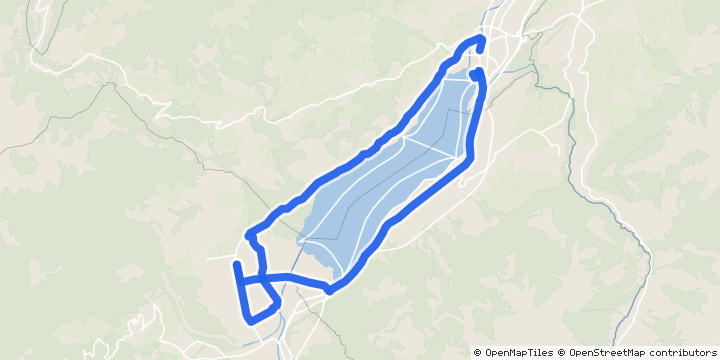 Sarnen · Obwalden
Course preview
Find your kind of race
A fully asphalted lake circuit and published pacers support a time goal, while rolling rises still require pacing. The race finishes on the Seefeld track. Older searches may call it Switzerland Marathon light; use the current route reference when comparing performances.
2026: median 1:57:38 · 2,579 classified finishers.
Explore pacers and the historical field ↓Course and data sources ↓A fully asphalted half-marathon circuit of Lake Sarnen, finishing on the Seefeld athletics track. A late-summer alternative to the spring races in this collection.
0 sustained climbs · 152 m descending
Mapped kilometres · select a stage to explore its terrain and footing. Race splits below use the official 21.1 km distance.
Scenic stills from TrailSplits' 3D renderer. Explore the corresponding course section.
Rendered 3D terrain views. Organizer-linked course reference. These are landscape previews, not ground-level photographs.
Map data © OpenStreetMap contributors. Terrain and contours in Switzerland © swisstopo (swissALTI3D). Terrain and contours produced using Copernicus WorldDEM-30 © DLR e.V. 2010-2014 and © Airbus Defence and Space GmbH 2014-2018 provided under COPERNICUS by the European Union and ESA; all rights reserved.
The course in its landscape · captured 2026-10-26: © swisstopo (swisstopo-OGD).
Approaching the finish · captured 2026-10-26: © swisstopo (swisstopo-OGD).
swisstopo open-data terms ↗Official course source ↗Running for a personal best?
Asphalt supports an even rhythm, with rolling rises to pace through. Compare those climbs, start-hour conditions and pacer choices for your time goal.
Your road time goal
Footing: 100% asphalt
Start: 09:00 · Explore race-hour conditions ↓
Published pacers: 1:30 · 1:45 · 2:00 · 2:15 · 2:30
Timing: Published results use net time from crossing the start line to the finish.
Cached accepted terrain profile; gradients use 100 m windows. Direction changes are at least 60° across 80 m, grouped within 100 m; these describe the line, not a count of junctions. Path grades come from the matched OpenStreetMap network. Organizer distance and height totals remain separate.
Official course source ↗Organizer states World Athletics / AIMS measurement; times enter the performance list.
Published results use net time from crossing the start line to the finish.
Lake circuit; stadium track finish.
Organizer-published course records
2027 published course reference · Organizer statements checked 2026-10-25. Timing and measurement statements remain separate from historical field distributions.
Official laeufe halbmarathon source ↗The chart shows historical finishers. Enter a target or choose a field time to add your scenario; the prefilled time is an example.
Overall women and men · 2,579 finishers. Time bins stay fixed to the overall field.
Classified overall women and men · 21.1 km · Historical edition of this distance; route and conditions may differ from the upcoming edition.
99% classified finishers · 2,579 of 2,610 published starters.
Compare actual fields, then turn one familiar result into editable candidate scenarios.
Blue bands show actual fields. “Same place” applies the reference’s finishing position to each other field; fields contain different people. Effort scenarios use matched-person ratios where accepted, otherwise the existing gradient and distance model. Ranges show the middle half of matched ratios, or the stated pace-sensitivity range. Edit each target for your own day.
Sarnersee Lauf · 2026 official field ↗Course factors describe the accepted route. Historical times describe the people who finished that edition. The chart uses a complete classified finish list, with other distances and nonfinishers excluded; its time basis is shown above. Each edition stays separate. Source and correction receipts were checked 2026-10-24.
Official measurement, record eligibility and qualifier rules are separate organizer/federation facts; the course assessment is a practical PB or preparation guide.
21.1 km with 151 m of mapped climbing. Practise a controlled opening and a steady effort across the distance. Use the course chapters to see how the day divides up.
100% asphalt. Use similar surfaces for some race-effort practice, including the rhythm of any repeated laps.
Course-specific preparation · mapped measurements use the reference route. Explore, compare and plan without an account.
Start at 09:00 on Brünigstrasse, Sarnen. Bib collection is at Kantonsschule Obwalden.
Finish on the Seefeld athletics track; allow for the separate start and bib-collection locations.
Settle into a sustainable effort and use the course chapters to plan your pace.
No sustained climb or descent of 50 m on the mapped reference. Explore the laps or pacing sections on the profile above.
Faded stretches are inferred from the type of path. Positions follow the matched network, scaled to the mapped course; a surface tag does not describe technical difficulty.
100% asphalt · organizer’s course description
OpenStreetMap tags the surface on 88% of this route; the rest is classed by its road type, an estimate.
Calculated on our mapped reference, using the same course analysis as the Planner. Heights are smoothed before identifying climbs and descents. The organizer’s published race distance and climbing remain the headline facts above. Analysis checked 2026-10-23; map release osm_weekly_20261018_0206.
8 published intermediate support locations. Highlight: official km 10.8–14.4.
1.2 · 3.1 · 5.9 · 8.9 · 10.8 · 14.4 · 17.7 · 19.5 km. Offerings vary by station; consult the official table.
The selected clock changes your scenario and finish margin. It does not change your race entry or block allocation.
Published schedule source ↗Use an organizer-listed target in your race plan.
Organizer’s pacer information ↗Published race kilometres; passage clocks use the same target, terrain and planned stops as your race plan.
| Race km | Offered | Your passage |
|---|---|---|
| 1.2 | Drinks | Choose a target |
| 3.1 | Drinks | Choose a target |
| 5.9 | Drinks | Choose a target |
| 8.9 | Drinks | Choose a target |
| 10.8 | Drinks + gels | Choose a target |
| 14.4 | Drinks + gels | Choose a target |
| 17.7 | Drinks + gels | Choose a target |
| 19.5 | Drinks + gels | Choose a target |
Example plan · 2:30 elapsed from 09:00. Edit a value or keep this example to make a deliberate choice.
Hours:minutes, including stops. Choose your assigned start block; changing this plan does not change your entry.
These are the accepted plan visits; a named split or control does not necessarily offer aid. Stops stay inside your target elapsed time.
Target finish is 512 min before sunset. Open-horizon daylight in Europe/Zurich.
Course-based pacing · 2:30 moving + 0 min stops = 2:30 elapsed
Use your current 2:30 plan as the baseline. Change one decision and see its effect.
Extra time is added to the baseline; its original planned stops remain.
Finish 11:30 · 30 min before closure
Longest: about 24 min · official km 10.8–14.4
Uses the current accepted course's split engine. Terrain adjustments apply to classified climb/descent sections. Support locations follow published race kilometres, positioned proportionally on the mapped line. Times between support points exclude the stop at either end. This is an editable sensitivity experiment on your baseline.
| Checkpoint | Race km | Elapsed | Clock | Margin |
|---|---|---|---|---|
| Aid 1.2 km | 1.2 | 0:09 | 09:09 | — |
| Aid 3.1 km | 3.1 | 0:23 | 09:23 | — |
| Aid 5.9 km | 5.9 | 0:44 | 09:44 | — |
| Aid 8.9 km | 8.9 | 1:07 | 10:07 | — |
| Aid 10.8 km | 10.8 | 1:20 | 10:20 | — |
| Aid 14.4 km | 14.4 | 1:44 | 10:44 | — |
| Aid 17.7 km | 17.7 | 2:07 | 11:07 | — |
| Aid 19.5 km | 19.5 | 2:19 | 11:19 | — |
| Finish | 21.1 | 2:30 | 11:30 | +30 min |
Moving time uses the existing TrailSplits pace engine: distance, climbing and descending. Stops are added at the listed intermediate checkpoints and remain inside your elapsed target. Heat, altitude and underfoot conditions do not automatically change this target-time plan.
Official race distance 21.1 km; mapped reference 21.38 km. Published kilometre points are positioned proportionally on that reference. The route profile retains mapped kilometres; the table retains official kilometre labels.
Sunset assumes an open horizon; mountains can shade a trail earlier. Margins use published finish/checkpoint limits where available; a blank margin means no applicable limit was accepted.
Organizer timing source · checked 2026-10-23 ↗Sarnersee Lauf · 21.1 km · 2:30 example · 09:00 start
Free, without registration. Your link includes the baseline, start, planned stops and pacing experiment; device saves stay in this browser.
Example: 2:30 elapsed from 09:00. Edit these assumptions to explore another race-day scenario.
13–19 °C
Typical hourly range · nearby stationGiswil, 471 m · 6.4 km from reference location
Rain in 11% of sampled hours15–23 °C
Typical hourly range · nearby stationGiswil, 471 m · 6.4 km from reference location
Rain in 7% of sampled hoursHistorical hourly observations near this calendar date (±14 days), 2018–2025. The displayed range is the 10th–90th percentile, using at least 186 observed hours across six years. Temperature is adjusted by 6.5 °C per 1,000 m where course and station heights differ by at least 100 m; these are estimates at course height. Rain describes sampled station hours, not a race-day probability.
Source: MeteoSwiss · CC BY 4.0 ↗
Sunlight uses our terrain horizon and solar calculator with this plan's passage times. Clouds and trees are separate. Near-horizon stretches remain uncertain.
The race-day forecast appears here as the race enters the forecast window.
Start choices come from the accepted organizer schedule.
September · 5 Sept 2027
Local time · Europe/Zurich
11–20 °C
Typical daily low–high in September
11–19 °C
Typical daily low–high in September
TerraClimate 1991–2020 monthly averages ↗. Monthly averages on a 4 km grid, with temperatures corrected to each location’s height. Precipitation is the monthly total of rain and snow water equivalent. These are typical conditions, not the race-day forecast.
Sun times use our daylight calculator and an open horizon. Nearby mountains affect when direct sunlight reaches the trail.
Organizer-linked course reference. Locations and heights follow the mapped reference course.
Compared with Sarnersee Lauf · 3 matching courses in this ten-race collection.
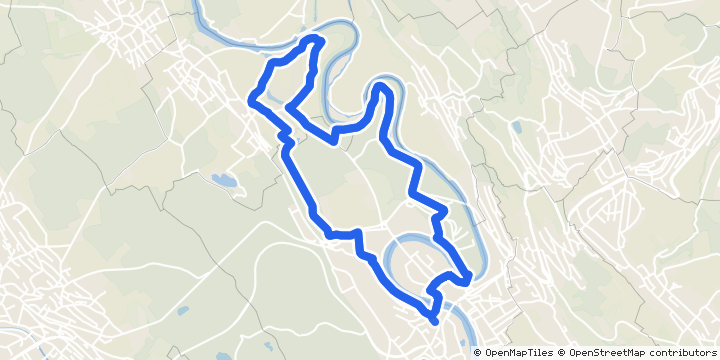 Bremgarten · Aargau
Similar distance · 2 laps
21.1 km instead of 21.1 km · starts 13:00
Compare these two →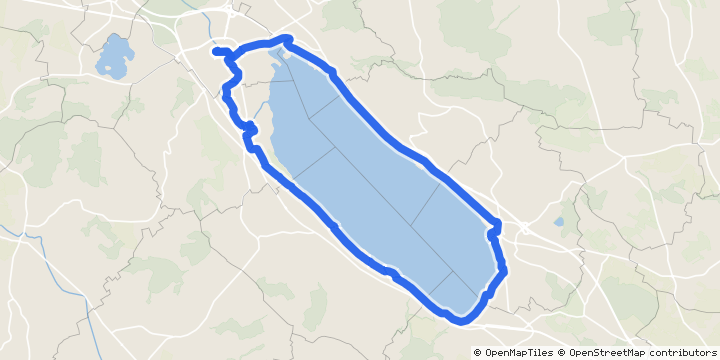 Sursee · Lucerne
Similar distance · 48% asphalt · 52% natural paths
21.1 km instead of 21.1 km · starts 18:05
Compare these two → Bramois, Sion · Valais
Similar distance · 4 laps
21.1 km instead of 21.1 km · starts 10:30
Compare these two →Use the course widget on your site, or send a correction with its official source. Organizer updates go through the existing verification and review process.
TrailSplits analyses an accepted organizer course reference using OpenStreetMap paths and terrain heights. Mapped distance and climbing can differ from the organizer’s measured totals. The course, timing and result references retain their own years; historical finish times describe that edition’s field. The published GPX is our matched reference.
Official course source Catalog date source · checked 2026-10-05 Selected-distance sourceBeta training plan
The organizer-confirmed date and distance shape this generic plan. Vertical targets stay blank until course elevation is verified.
41 weeks and 3 days are available: enough for a full progression and taper.
Use it for race-effort sessions and race day. Easy runs stay easy whatever the goal; the plan's efforts come from how you run now.
The plan starts 14 June 2027, 30 weeks from now. Until then, easy running at your usual volume keeps you ready for week 1; the season planner can fill those weeks with base training.
Default starting point: 30 stable km/week, longest recent outing 13 km, 4 running days/week, aiming to finish well.
No connected training history is used. Unanswered details remain conservative assumptions.
No account needed. A kept plan stays on this browser until its storage is cleared; find it under My kept plans, where you can also change single weeks.
Choose a subscription that refreshes, or download a one-time copy.
Change only what you know. The preparation check and plan update immediately, without an account.
Still being enriched: course elevation or GPX. Future previews may use new evidence; kept copies remain unchanged.
In this 12-week plan your long run grows safely to about 17 km; race day covers the rest for the first time, so start slower than feels necessary. You have 41 weeks: steady easy running before the plan starts lets it begin from a longer run.
Rest or gentle mobility.
30 min (about 4.9 km). Start with 10 minutes easy. Then 6 x 20 seconds relaxed strides, with 1 minute easy between repeats. Finish with at least 10 minutes easy; any remaining time is easy.
Practise relaxed coordination.
45 min (about 7.3 km). Conversational aerobic running. Keep easy days easy enough to support the key work.
85 min (about 13.8 km). Build relaxed time on feet at conversational effort.
25 min (about 4.1 km). Keep this genuinely easy, or substitute an easy hike.
Rest or gentle mobility.
30 min (about 4.8 km). Start with 10 minutes easy. Then 6 x 20 seconds relaxed strides, with 1 minute easy between repeats. Finish with at least 10 minutes easy; any remaining time is easy.
Practise relaxed coordination.
45 min (about 7.2 km). Conversational aerobic running. Keep easy days easy enough to support the key work.
95 min (about 15.1 km). Build relaxed time on feet at conversational effort.
25 min (about 4 km). Keep this genuinely easy, or substitute an easy hike.
Rest or gentle mobility.
30 min (about 4.8 km). Start with 10 minutes easy. Then 6 x 20 seconds relaxed strides, with 1 minute easy between repeats. Finish with at least 10 minutes easy; any remaining time is easy.
Practise relaxed coordination.
45 min (about 7.2 km). Conversational aerobic running. Keep easy days easy enough to support the key work.
100 min (about 16.1 km). Build relaxed time on feet at conversational effort.
30 min (about 4.8 km). Keep this genuinely easy, or substitute an easy hike.
Rest or gentle mobility.
25 min (about 4 km). Start with 10 minutes easy. Then 4 x 20 seconds relaxed strides, with 1 minute easy between repeats. Finish with at least 10 minutes easy; any remaining time is easy.
Practise relaxed coordination.
40 min (about 6.4 km). Conversational aerobic running. Keep easy days easy enough to support the key work.
80 min (about 12.7 km). Build relaxed time on feet at conversational effort.
25 min (about 4 km). Keep this genuinely easy, or substitute an easy hike.
Rest or gentle mobility.
45 min (about 7.3 km). Start with 10 minutes easy. Then 3 x 6 minutes at a steady effort, about what you expect to hold on race day, with 3 minutes easy between. Finish with at least 10 minutes easy.
Rehearse sustainable race effort.
40 min (about 6.5 km). Conversational aerobic running. Keep easy days easy enough to support the key work.
100 min (about 16.2 km). Build relaxed time on feet at conversational effort.
30 min (about 4.9 km). Keep this genuinely easy, or substitute an easy hike.
Rest or gentle mobility.
45 min (about 7.3 km). Start with 10 minutes easy. Then 3 x 6 minutes at a steady effort, about what you expect to hold on race day, with 3 minutes easy between. Finish with at least 10 minutes easy.
Rehearse sustainable race effort.
55 min (about 8.9 km). Conversational aerobic running. Keep easy days easy enough to support the key work.
100 min (about 16.2 km). Build relaxed time on feet at conversational effort.
35 min (about 5.7 km). Keep this genuinely easy, or substitute an easy hike.
Rest or gentle mobility.
50 min (about 8 km). Start with 10 minutes easy. Then 3 x 8 minutes at a steady effort, about what you expect to hold on race day, with 3 minutes easy between. Finish with at least 10 minutes easy.
Rehearse sustainable race effort.
55 min (about 8.8 km). Conversational aerobic running. Keep easy days easy enough to support the key work.
105 min (about 16.7 km). Build relaxed time on feet at conversational effort.
35 min (about 5.6 km). Keep this genuinely easy, or substitute an easy hike.
Rest or gentle mobility.
30 min (about 4.8 km). Start with 10 minutes easy. Then 6 x 20 seconds relaxed strides, with 1 minute easy between repeats. Finish with at least 10 minutes easy; any remaining time is easy.
Practise relaxed coordination.
60 min (about 9.6 km). Conversational aerobic running. Keep easy days easy enough to support the key work.
80 min (about 12.8 km). Build relaxed time on feet at conversational effort.
30 min (about 4.8 km). Keep this genuinely easy, or substitute an easy hike.
Rest or gentle mobility.
55 min (about 8.9 km). Start with 10 minutes easy. Then 2 x 12 minutes at a steady effort, about what you expect to hold on race day, with 3 minutes easy between. Finish with at least 10 minutes easy.
Rehearse sustainable race effort.
60 min (about 9.7 km). Conversational aerobic running. Keep easy days easy enough to support the key work.
105 min (about 17 km). Use race-like terrain where practical, but keep the overall effort controlled.
35 min (about 5.7 km). Keep this genuinely easy, or substitute an easy hike.
Rest or gentle mobility.
55 min (about 8.8 km). Start with 10 minutes easy. Then 2 x 12 minutes at a steady effort, about what you expect to hold on race day, with 3 minutes easy between. Finish with at least 10 minutes easy.
Rehearse sustainable race effort.
75 min (about 12 km). Conversational aerobic running. Keep easy days easy enough to support the key work.
105 min (about 16.8 km). Use race-like terrain where practical, but keep the overall effort controlled.
40 min (about 6.4 km). Keep this genuinely easy, or substitute an easy hike.
Rest or gentle mobility.
35 min (about 5.6 km). Start with 10 minutes easy. Then 4 x 2 minutes at controlled race effort, with 1 minute easy between repeats. Finish with at least 10 minutes easy; any remaining time is easy.
Rehearse sustainable race effort.
50 min (about 7.9 km). Conversational aerobic running. Keep easy days easy enough to support the key work.
70 min (about 11.1 km). Keep this comfortable and finish with plenty in reserve.
25 min (about 4 km). Keep this genuinely easy, or substitute an easy hike.
35 min (about 5.5 km). Keep this short and conversational. The goal is freshness, not fitness.
35 min (about 5.5 km). Run conversationally. If already familiar, include a few relaxed strides with full recovery; otherwise stay easy.
20 min (about 3.2 km). Rest, or jog very easily if that reliably helps you feel better.
Run the 21.1 km as planned: start controlled and use the fuelling and kit rehearsed in training.